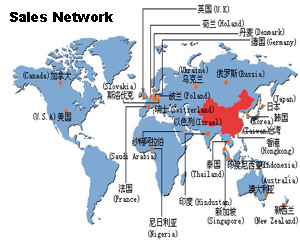
Online sell Sorbic Acid Potassium Sorbate

Many people turn to dietary supplements to help meet their essential nutrient requirements. Some are self-medicating with supplements in attempts to fix minor or major ailments, and others hope to maintain their memory or even extend their life span.
Too often, people consider dietary supplements to be completely safe. But safety is not guaranteed, even when a product is considered to be “natural.” The safety of a product depends not only on the supplement’s contents, but also on the condition and health status of the person taking the supplement. But, despite …

I’m not much of a root beer drinker. However, while traveling through the south end of Milwaukee, I happened to notice and pick up a plastic bottle of Lakefront Brewery’s Golden Maple Root Beer from the refrigerated cooler of a local cider mill. Immediately, I was intrigued: one of my favorite breweries had decided to make a root beer, and not only that, but had decided to add in maple syrup!
Lakefront Brewery’s root beer had the light amber hue of honey instead of the dark brown color that is traditionally …

Many people reading product ingredient lists see these three names quite often. What’s the connection between them, and why do they appear so often in processed foods?
What you need to know:
1. Ascorbic acid (E300) and vitamin C are one and the same, and are an essential nutrient for humans.
2. Citric acid (E330) and ascorbic acid both occur naturally in citrus fruits, but there is no vitamin C in citric acid.
3. Citric acid is responsible for the tart and sour taste of lemons, and to a lesser extent other citrus fruits …
Consumer safety articles, such as mine, often report how something seemingly innocuous will actually kill you, or at the very least, leave you maimed and crippled. In deference to this great modern media tradition, here’s my hysteria-inducing list:
1. Cookie dough (and anything else containing raw eggs): In addition to the risk of E. coli discussed in the article, eating egg-containing dough prior to baking it puts you at risk for Salmonella.
2. Fish: Sushi, sashimi, and ceviche can carry multiple parasites. My favorite is Diphyllobothrium latum, an intestinal tapeworm transmitted by …

Wine contains approximately 1000 components of which water citric .2 to .7, lactic .2 – 3, malic 4.5, sorbic, acetic .5 to .7, glucinic traces, succinic up to 1,) residual sugar .8 – 180 grams/L, sulphates, chlorides, glycerol, acetaldehyde, phenols or phenolics to which tannins belong, phosphates, potassium, copper, iron, carbon dioxide, and sulphur dioxide.
The composition depends on grape variety, the soil on which it grew, composition of the soil, ripeness of the fruit at picking, winemaking technique and aging before bottling.
Alcoholic fermentation transforms sugar to alcohol, while malolactic fermentation …